









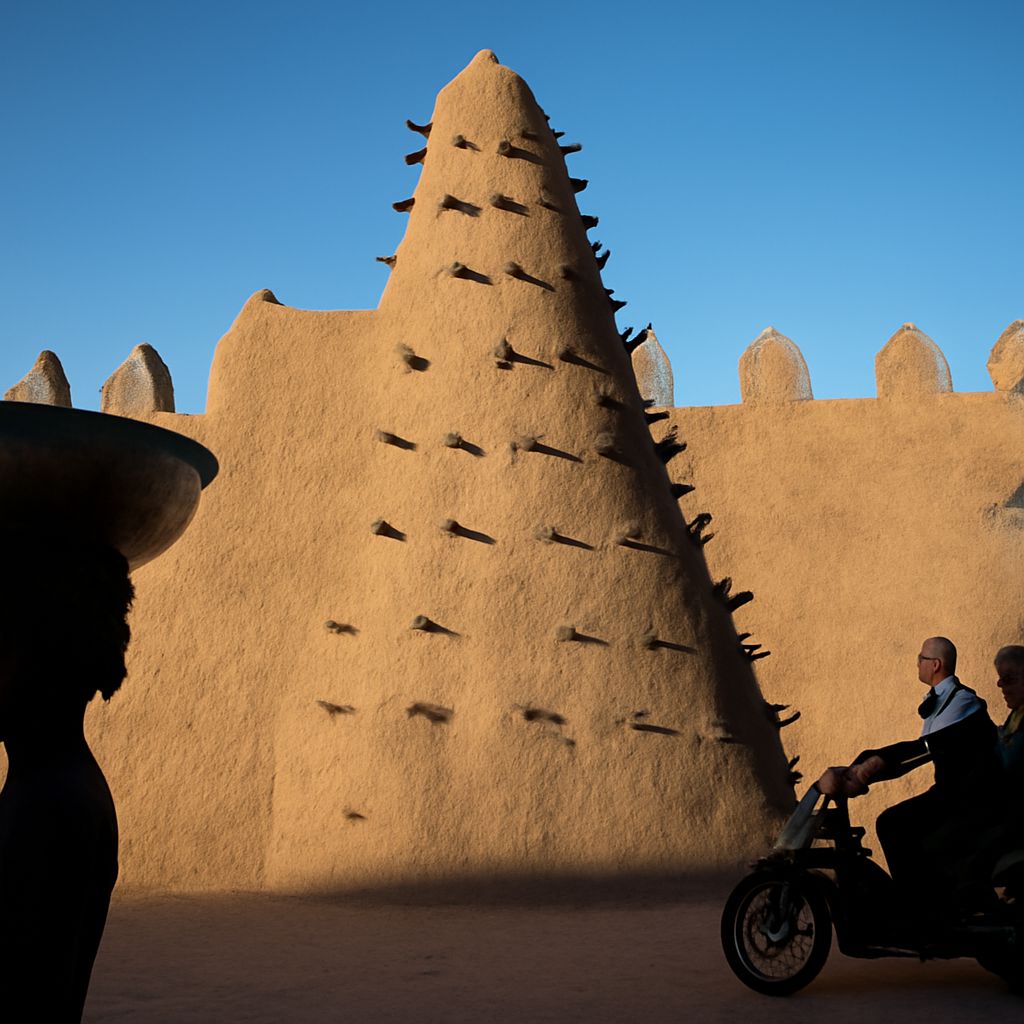
The Djinguereber Mosque, nestled in the heart of Timbuktu, Mali, stands as a testament to the rich cultural and historical heritage of the region. As a UNESCO World Heritage Site, this mosque is not only a religious center but also an architectural marvel that has drawn visitors from around the globe to marvel at its unique design and profound significance.
The Historic Significance of Djinguereber Mosque
Constructed in 1327 under the reign of the Malian Emperor Mansa Musa, the Djinguereber Mosque is an enduring symbol of the Islamic influence in West Africa. Its inception served as a beacon for the spread of Islam in the region, marking Timbuktu as a scholarly hub. Over centuries, Timbuktu became synonymous with knowledge, attracting scholars and traders alike, making the mosque a pivotal fixture in the city’s historical narrative. It reflects the seamless integration of Islamic teachings into the local traditions and is a reminder of the city’s golden age during the medieval period.
Architectural Features of the Timbuktu Mosque
The architecture of the Djinguereber Mosque is a brilliant illustration of Sudano-Sahelian design, which incorporates elements from across the Sahara region. The mosque is primarily constructed from mud bricks, a common building material that ensures a natural insulation against Timbuktu’s harsh desert climate. Its flat roof and rectangular layout are characteristic of the style, while the towering minaret offers a striking silhouette against the skyline. Intricate wooden beams and decorative motifs further accentuate the mosque’s aesthetic, showcasing the craftsmanship of local artisans. The mosque’s design not only serves a functional purpose but also symbolizes the cultural synthesis of the Islamic and indigenous architectural traditions.
Cultural Importance and Influence
The Djinguereber Mosque is a cultural cornerstone for Timbuktu and the broader region. It remains an active place of worship, fostering community ties and spiritual growth among its attendees. Beyond its religious role, the mosque has historically served as a center for learning. During its zenith, it was part of a network of educational institutions that facilitated the exchange of knowledge, ideas, and scholarly works across the Islamic world. This enduring legacy continues to influence modern cultural and educational practices, as the mosque stands as a symbol of intellectual and spiritual enlightenment.
Visiting the Djinguereber Mosque Today
Today, visiting the Djinguereber Mosque offers a unique glimpse into the past and present of Timbuktu. While access may be limited due to preservation efforts, guided tours provide valuable insights into its history and architectural significance. Visitors can explore the surrounding areas, witnessing the local life and the cultural vibrancy that the mosque has inspired. It remains a revered site for both pilgrims and tourists, allowing them to appreciate the profound historical and cultural narratives embedded within its walls. The Djinguereber Mosque, with its storied past and architectural grandeur, continues to be a milestone in understanding the rich tapestry of Timbuktu’s heritage.