








Siege towers were remarkable innovations in medieval warfare that played a crucial role in assaults on fortified positions. These towering structures were designed to breach the formidable defenses of castles and cities, allowing armies to engage in combat directly over the enemy walls. Understanding the engineering, historical significance, and strategic use of siege towers offers valuable insights into their impact on military tactics during the Middle Ages.
The Engineering Behind Siege Towers
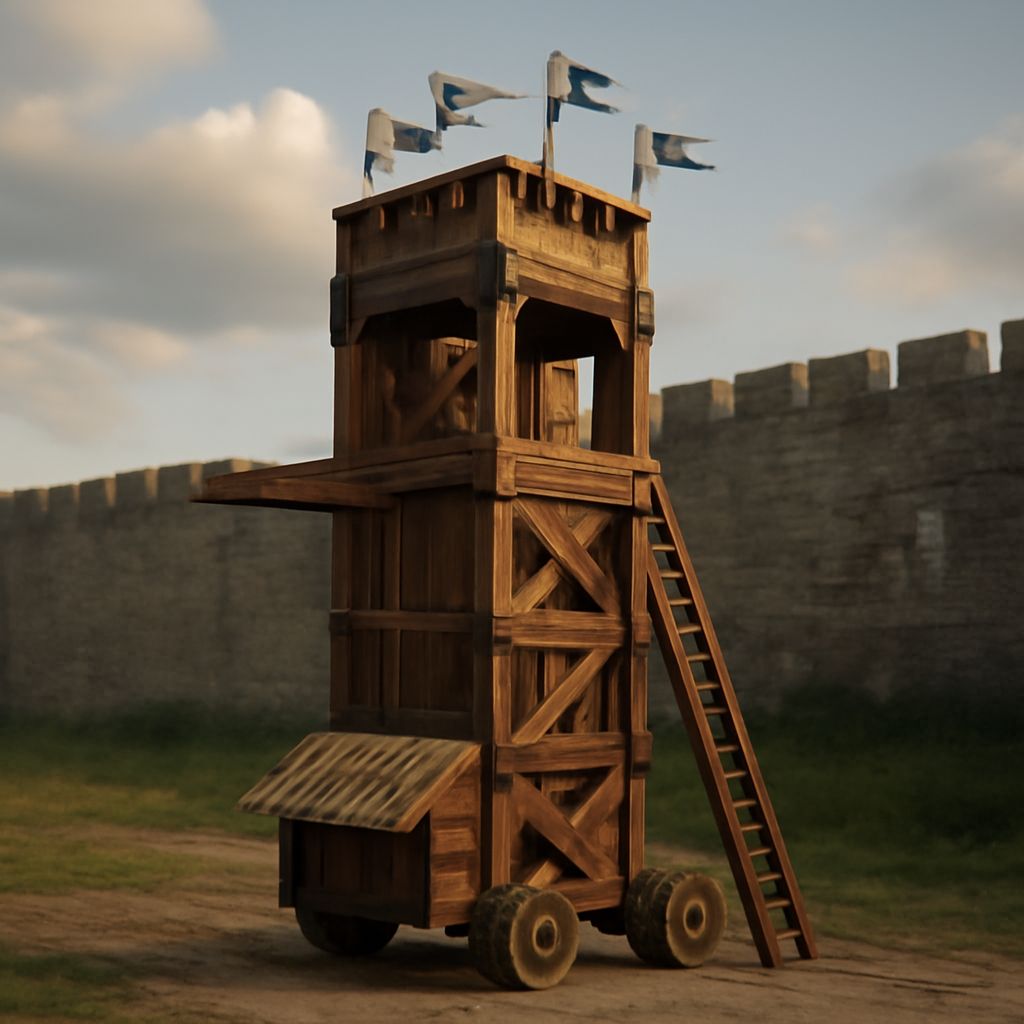
The engineering of a siege tower was an impressive feat for its time. Typically constructed from wood, these towers were built to reach the height of the walls they intended to breach, sometimes towering over 30 meters. The base of the tower was often mounted on wheels or rollers, allowing soldiers to push it toward the enemy fortifications. This mobility was crucial for positioning the tower effectively during a siege.
The interior of a siege tower was divided into several levels. Each level served a different purpose, such as housing archers or soldiers equipped with various siege equipment. The top of the tower featured a drawbridge mechanism, which could be lowered onto the enemy walls to allow direct access for troops. This design minimized exposure to enemy projectiles, providing a relatively safe ascent for the attacking forces.
Historical Significance of Siege Towers
Siege towers played a pivotal role in several iconic historical sieges. Their usage dates back to ancient times, with notable improvements and adaptations made throughout the Middle Ages. The construction and deployment of these towers often marked the turning point in prolonged sieges, as they enabled attackers to overcome previously impregnable defenses.
One of the most significant aspects of siege towers was their psychological impact. The sight of these towering structures approaching could demoralize defenders, knowing that the invaders had the means to breach their once-secure walls. Furthermore, the complexity and resources required to build siege towers demonstrated the attackers’ commitment and capability to capture fortified positions.
Strategic Use in Medieval Warfare
Design and Construction
The design and construction of siege towers required careful planning and significant resources. Commanders needed to consider the height of the enemy walls, the terrain surrounding the fortification, and the materials available for building. Timber was the primary material used, and its availability often dictated the feasibility of constructing a siege tower. Additionally, the tower had to be built sturdy enough to withstand projectiles and attacks from defenders.
Construction typically took place a safe distance from enemy defenses, often in nearby forests where timber was readily available. Once completed, the siege tower could be disassembled and transported in parts or, if possible, wheeled directly to the siege site. The process required skilled labor and was time-consuming, underscoring the significant investment in siege warfare.
Deployment in Battle
In battle, the deployment of a siege tower was a critical phase. The attacking commander needed to coordinate the movement of the tower with other siege engines, such as catapults and battering rams, to maximize the pressure on the defenders. The tower was often accompanied by covering fire from archers and crossbowmen to suppress defensive counters.
Once in position, the drawbridge would be lowered, allowing troops to storm the enemy walls. This maneuver required careful timing and coordination, as defenders would focus their efforts on preventing the bridge from being secured. Despite these challenges, successful deployment of a siege tower often resulted in a breach, leading to hand-to-hand combat on the walls and, ultimately, the fall of the fortress.
Notable Battles Involving Siege Towers
Several famous battles demonstrated the effectiveness of siege towers. One of the most renowned was the Siege of Jerusalem in 1099 during the First Crusade, where siege towers played a decisive role in the Crusaders’ victory. The towers allowed them to breach the walls and capture the city after weeks of siege.
Another notable example is the Siege of Acre in 1189-1191, part of the Third Crusade. During this prolonged siege, both the attacking Crusaders and the defending Muslim forces utilized siege towers to gain strategic advantages. The use of these towers illustrated the importance of siege warfare tactics in the medieval period.
These battles highlight how siege towers were not just tools of war but symbols of military ingenuity and determination. Their impact on the outcome of sieges solidified their place in the annals of military history, showcasing the blend of engineering prowess and strategic acumen in medieval warfare.