

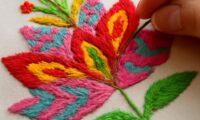





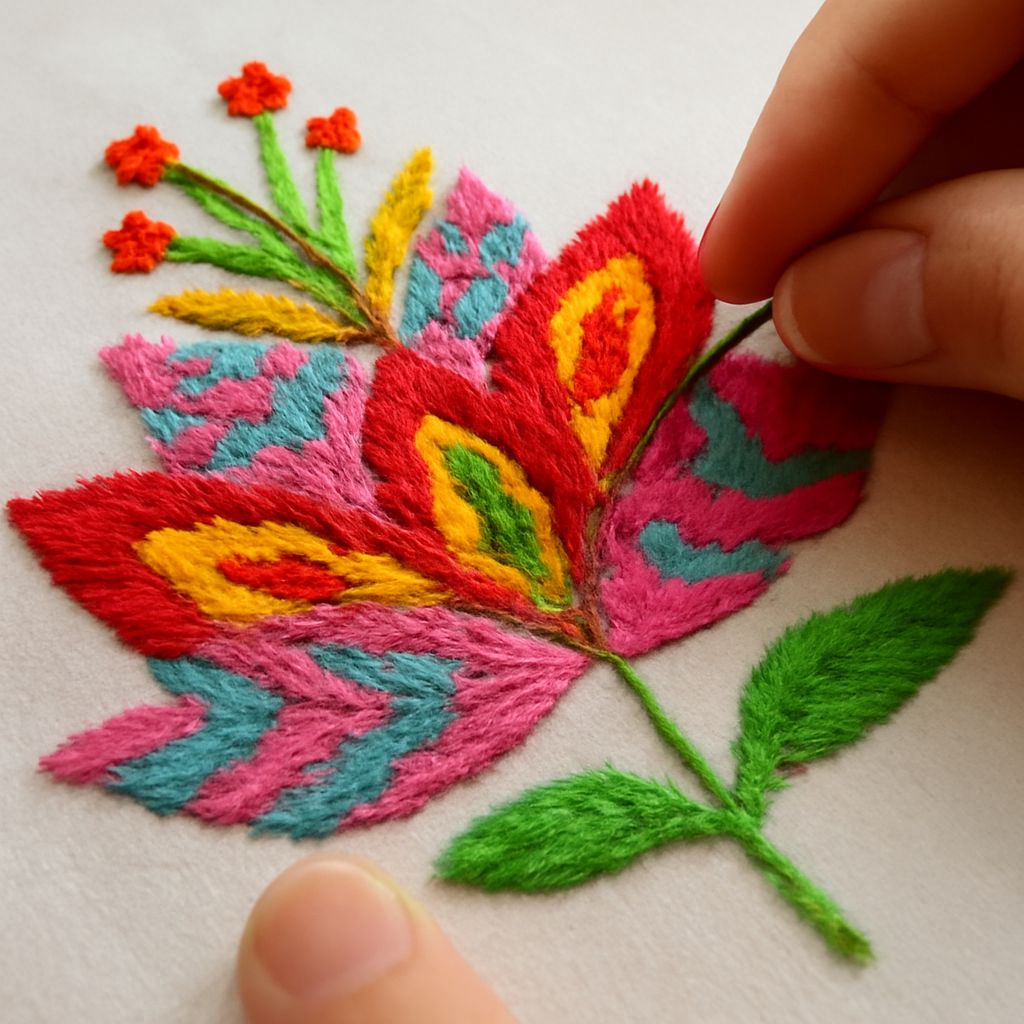
Phulkari, meaning “flower work,” is a traditional form of embroidery with its roots deep in the cultural tapestry of Punjab, a region shared by India and Pakistan. This vibrant textile art is known for its intricate designs and vivid colors, often reflecting the rich cultural heritage of the Punjabi people. Today, phulkari continues to enchant both traditionalists and contemporary fashion enthusiasts, serving as a symbol of identity and craftsmanship.
What is Phulkari?
Phulkari is a type of embroidery that primarily uses silk threads to create floral patterns on fabric. The word “phulkari” itself translates to “flower work” in Punjabi, highlighting the floral motifs that are central to this art form. Traditionally, phulkari was crafted by women of the household and was used to embellish clothing items such as dupattas (scarves), shawls, and traditional wear like salwar kameez. The embroidery is typically done on a hand-woven cotton fabric, dyed in vibrant colors, with the motifs stitched in contrasting silk threads.
The History and Origins of Phulkari
The origins of phulkari date back to the 15th century, with references found in the folklore and literature of Punjab. This art form was not just a craft but a way of life, with each piece holding sentimental value. Traditionally, phulkari was an integral part of a Punjabi woman’s trousseau. It was handcrafted by mothers and grandmothers for their daughters and granddaughters, serving as a family heirloom passed down through generations.
Phulkari gained prominence during the Mughal era, which is evident in the intricate designs and elaborate patterns seen in historical pieces. Over time, phulkari evolved, reflecting the social and cultural changes in the region. Despite its evolution, it has retained its essence, celebrating the vibrant culture and artistry of Punjab.
Techniques and Materials Used in Phulkari
The craft of phulkari involves several distinct techniques, with each resulting in a unique pattern and appearance. The most common technique is the bagh, which means “garden.” In this technique, the entire surface of the fabric is covered with embroidery, leaving no gaps, creating a rich, textured look.
Another technique is the chope, often characterized by its simplicity. It is usually crafted as a gift for brides and features plain red or maroon fabric with minimal embroidery, focusing on linear patterns.
The materials used in phulkari are equally important in defining its aesthetic. Traditionally, the base fabric was hand-woven khaddar, a coarse cotton fabric, which provided durability and ease of stitching. The threads used are typically silk, known for their sheen and vibrancy, adding to the overall appeal of the embroidery.
Cultural Significance of Phulkari
Phulkari holds immense cultural significance in Punjab, symbolizing the rich heritage and traditions of the region. It is more than just an art form; it is a storytelling medium that reflects the social and cultural life of the Punjabi people. Each piece is unique, often depicting local flora, fauna, and everyday life, infused with the personal stories and emotions of the creator.
Phulkari also plays a significant role in various ceremonies and rituals. It is considered auspicious and is often a part of wedding ceremonies, where it is gifted to brides as a symbol of prosperity and good fortune. The motifs and colors used in phulkari are also believed to have symbolic meanings, often associated with different life stages and events.
In recent years, phulkari has seen a resurgence in popularity, both in India and internationally. Designers have adapted the traditional motifs and techniques to suit contemporary fashion trends, introducing phulkari to a global audience. This renewed interest has not only preserved the craft but has also provided a livelihood for artisans who continue to practice this ancient art form.
