








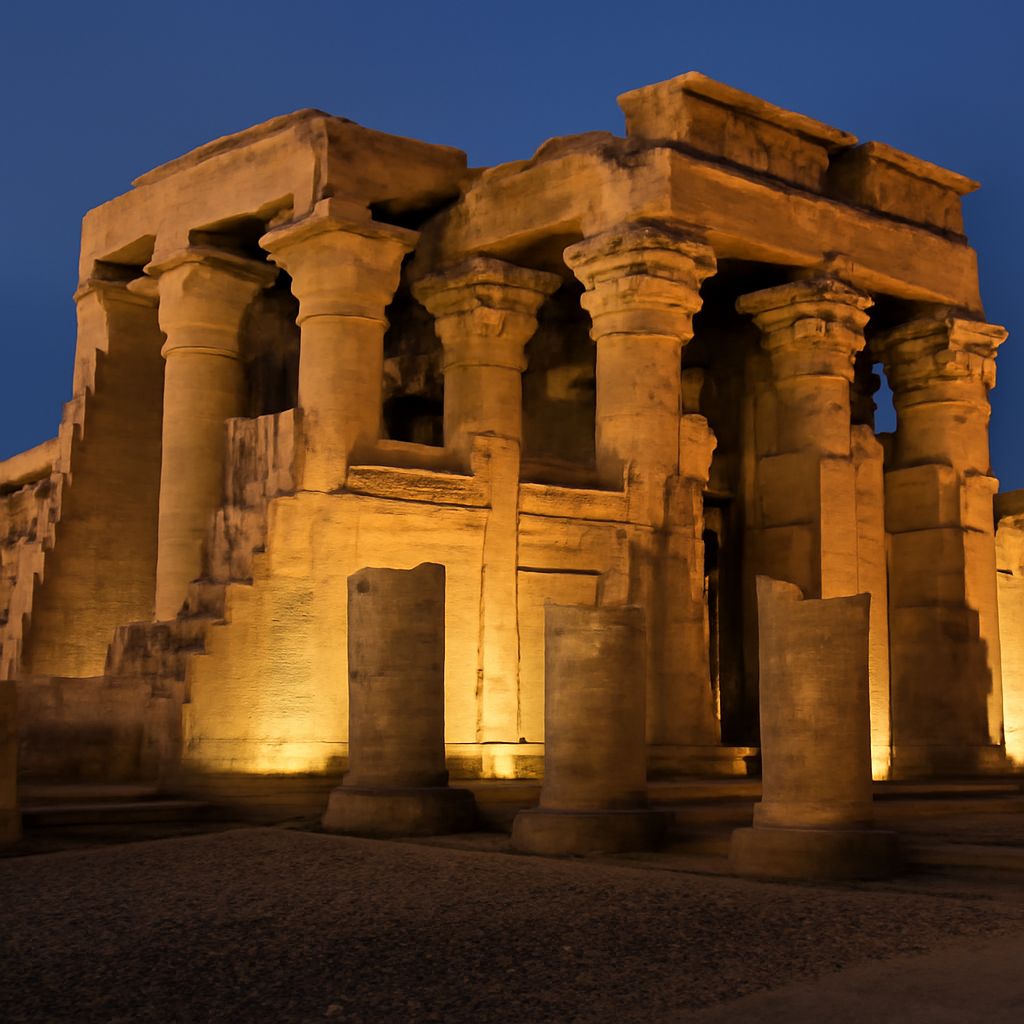
The Temple of Kom Ombo is an extraordinary archaeological site in Egypt, known for its unique dual dedication to two gods. Located on the banks of the Nile River, this temple offers a fascinating glimpse into the religious practices and architectural skills of ancient Egypt. Its distinctive structure and historical significance continue to draw visitors from around the world.
Introduction to the Temple of Kom Ombo
Situated in the town of Kom Ombo, the temple stands around 47 kilometers north of Aswan. Its location was strategically chosen for its proximity to the Nile, allowing it to serve as both a religious and economic center. The temple’s most distinguishing feature is its dual dedication to two gods: Sobek, the crocodile god, and Horus, the falcon-headed god. This duality is reflected throughout the temple’s design, making it a unique monument in Egypt.
Historical Background
The Temple of Kom Ombo was built during the Ptolemaic dynasty, approximately between 180–47 BC, with some additions made in the Roman period. It was initiated under the rule of Ptolemy VI Philometor and later expanded by other Ptolemaic rulers. The temple’s construction was part of the Ptolemies’ efforts to establish their legitimacy by aligning themselves with Egyptian tradition and religion. The site also played a vital role in local agriculture, as the nearby Nile provided essential irrigation for crops.
Architectural Features
The temple is renowned for its symmetrical design, effectively divided into two parallel sections, each dedicated to a different deity. This duality is mirrored in the twin entrances, halls, sanctuaries, and other chambers. The inner sanctum, where rituals were performed, is accessible through a sequence of hypostyle halls adorned with columns that showcase intricate carvings and hieroglyphs.
The temple walls are decorated with detailed reliefs depicting various scenes, including offerings to the gods and mythological events. Notably, the carvings also include medical instruments, suggesting the site may have functioned as a center for healing. Additionally, the temple complex includes a well-preserved nilometer, which was used to measure the Nile’s water level, crucial for predicting the success of the annual floods.
Significance of Dual Dedication
What sets the Temple of Kom Ombo apart from other Egyptian temples is its dual dedication. Sobek, revered for his ferocity and power, was believed to offer protection from the dangers of the Nile, particularly crocodiles. In contrast, Horus represented kingship, protection, and the sky. By honoring both deities, the Ptolemaic rulers sought to unify different religious traditions, thereby consolidating their power and appealing to a broad segment of the population.
This duality is also reflected in the myths and rituals performed at the temple. The coexistence of two religious traditions within one structure is a testament to the Ptolemies’ diplomatic approach to governance, blending Greek and Egyptian elements to maintain harmony and stability in their empire.
Visiting the Temple Today
Today, the Temple of Kom Ombo is a popular tourist destination, offering insights into ancient Egyptian religion and architecture. Visitors can explore the temple and its surroundings, including the recently opened Crocodile Museum, which houses mummified crocodiles and other related artifacts.
To make the most of a visit, it is recommended to hire a knowledgeable guide who can provide detailed explanations of the temple’s history and significance. The site is accessible by road or river, with many Nile cruises including Kom Ombo as a stop in their itineraries. The temple is particularly captivating at sunset when the fading light enhances its atmospheric beauty.
Whether approached by land or river, the Temple of Kom Ombo continues to captivate those who seek to understand the complexities of ancient Egyptian civilization.
