








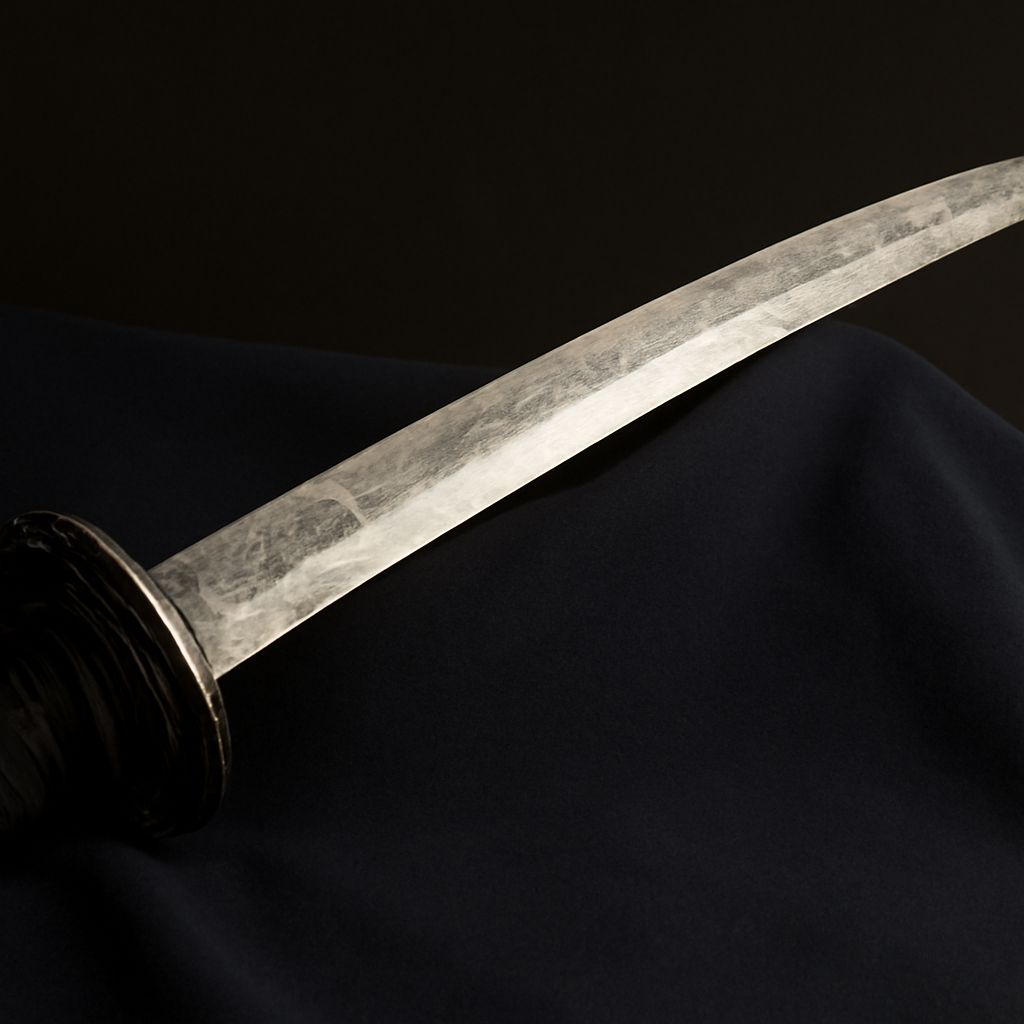
The katana hamon is a distinctive feature on traditional Japanese swords that captivates both enthusiasts and craftsmen. The hamon, a visual pattern on the blade, is not just an aesthetic element but also a testament to the meticulous craftsmanship involved in its creation. This guide delves into the essence of katana hamon, exploring its crafting process, various patterns, and significance in swordsmanship.
What is Katana Hamon?
The katana hamon is a unique, wavy line that appears along the edge of a katana blade, resulting from the differential hardening process during its creation. This pattern is not merely ornamental; it serves as an indicator of the blade’s hardness distribution, affecting its overall strength and flexibility. The hamon is created through a careful application of clay during the quenching process, which controls the cooling rate of different parts of the blade.
The Crafting Process of Hamon
Creating the hamon involves a traditional and intricate process. Initially, a smith coats the blade with a clay mixture, varying the thickness along the edge and body. During quenching, the thinly coated edge cools rapidly, forming martensite—a hard microstructure, while the thicker-coated body cools slowly, resulting in a softer, more flexible steel. This differential cooling creates the hamon pattern, showcasing the smith’s skill and precision.
Different Types of Hamon Patterns
Hamon patterns vary widely, each with its unique name and aesthetic appeal. Some of the most renowned types include:
- Suguha: A straight, simple line that is elegant and understated.
- Notare: Featuring gentle, wave-like undulations, notare resembles ocean waves.
- Choji: Resembling clover blossoms, this pattern includes larger, circular waves.
- Gunome: A series of alternating semicircles, offering a rhythmic, saw-tooth appearance.
- Hitatsura: A complex pattern covering the entire blade, known for its artistic flair.
Each style reflects the individual smith’s artistry and intent, with some preferring more intricate designs while others opt for simplicity and elegance.
Significance of Hamon in Swordsmanship
The hamon is crucial in evaluating a katana’s quality and performance. Beyond aesthetics, it indicates the blade’s structural integrity. A well-executed hamon suggests a balanced blade, capable of withstanding the stresses of use while maintaining sharpness. Historically, warriors and collectors have valued these patterns as markers of authenticity and craftsmanship, making the hamon a key factor in a katana’s appraisal and desirability.
In summary, the katana hamon is much more than a decorative feature. It embodies the skill and tradition of Japanese swordmaking, offering insight into the blade’s performance capabilities, and continues to captivate sword enthusiasts around the world.
