









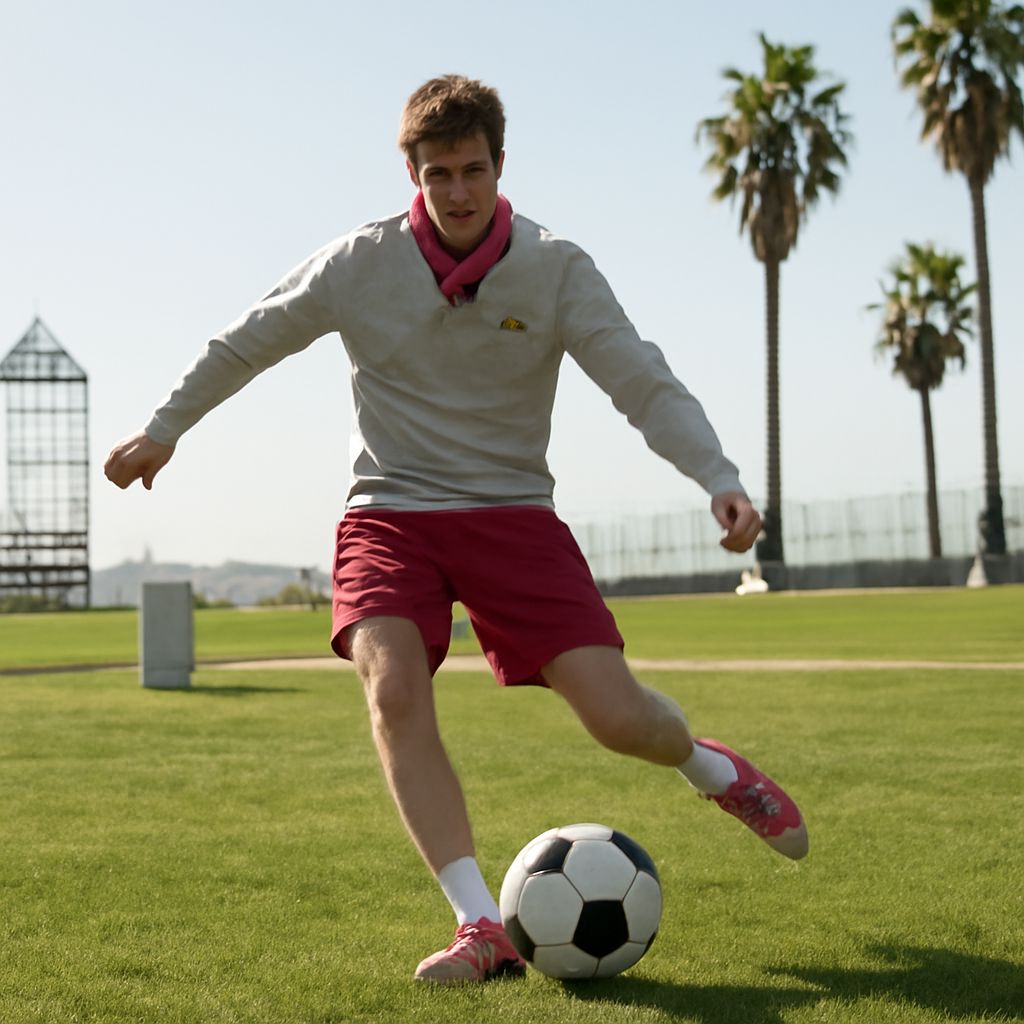
Reliable sports photography starts with a fast shutter speed, an aperture that separates the subject from the background, and continuous autofocus. A useful baseline is 1/1000 sec, f/2.8–f/4, Auto ISO, and continuous AF. This setup suits many field, court, track, and action photography situations, then can be adjusted for available light, subject speed, working distance, and the required depth of field.
For extreme sports photography, the same baseline provides a starting point rather than a fixed formula. Faster movement, unpredictable direction changes, longer lenses, and limited access to the subject usually require more shutter speed, higher ISO, wider focus coverage, or deliberate pre-focusing.
Sports Photography Settings: A Reliable Starting Point
Start at 1/1000 Sec, f/2.8–f/4, Auto ISO, and Continuous AF
Set the shutter speed to 1/1000 sec to freeze running athletes, football plays, tennis strokes, cyclists, and most routine action. Use 1/1250 to 1/2000 sec for motorsports, fast cycling, diving, jumps, or moments when the subject moves directly toward the camera. A speed around 1/500 sec can work for slower movement, panning, or deliberate motion blur, but it leaves less margin for subject movement and camera shake.
An aperture of f/2.8 to f/4 gathers useful light and creates enough background separation to keep attention on the athlete. Auto ISO lets the camera maintain the selected shutter speed as the subject moves between sun and shade. Exposure compensation can be used when bright uniforms or dark backgrounds cause the camera to over- or underexpose the subject.
Adjust Shutter Speed, Aperture, and Depth of Field for the Sport
Raise shutter speed when the action is faster, the lens is longer, the subject is approaching the camera, or images show movement blur. Open the aperture when light is limited or a blurred background is important. Stop down to f/5.6 or f/8 when several athletes must remain sharp, when the subject distance is uncertain, or when a wider depth of field improves the chance of usable focus.
Manual exposure with Auto ISO gives consistent shutter speed and aperture across changing backgrounds. Aperture priority can work in stable daylight, but the camera may select a shutter speed that is too slow when clouds, shade, or a dark background reduce the light.
Freeze Fast Action Without Losing Exposure
Raise Shutter Speed for Faster Motion or Longer Lenses
Motion blur depends on subject speed, direction, focal length, and distance. A runner crossing the frame needs less speed than a motocross rider moving toward the camera, while a 400mm lens magnifies small camera movements. Start at 1/1000 sec, review the subject’s hands, face, wheels, or equipment at high magnification, and increase the speed if edges are soft.
For a panning effect, use approximately 1/30 to 1/250 sec depending on speed and focal length. Track the subject smoothly, keep the camera moving after the exposure, and expect a high discard rate. This technique is expressive but less reliable than freezing the action.
Raise ISO Before Accepting Motion Blur
When the meter cannot support the selected shutter speed and aperture, raise ISO rather than allowing the shutter to fall too low. A slightly noisy image usually retains more useful detail than a blurred face or ball. In bright outdoor conditions, ISO 100–400 may be sufficient. Indoor courts, evening events, and shaded venues may require ISO 800–6400 or higher, depending on the camera.
Expose the subject carefully and avoid severe underexposure. Brightening a dark file later can make noise more visible and reduce color quality. Modern cameras often produce clean results at moderate and high ISO, especially when exposure is close to correct.
Use More Depth of Field When Focus Is Uncertain
A wide aperture does not always produce the best result. At f/2.8, a nearby athlete moving toward the camera may pass through the focus plane quickly. Closing the aperture to f/4 or f/5.6 gives the autofocus system more room for error and can keep both a rider and bicycle acceptably sharp.
Use a wider aperture when the background is distracting, the subject is isolated, and focus tracking is dependable. Use more depth of field when athletes overlap, movement is unpredictable, or the exact distance cannot be maintained.
Autofocus and Burst Timing for Action Photography
Continuous AF, Subject Tracking, and Focus-Area Choice
Choose continuous autofocus—often called AF-C or AI Servo—so the camera updates focus while the subject moves. Subject tracking can work well when the athlete is visually distinct and the background is not crowded. In busy scenes, a smaller dynamic-area group or expanded point may give greater control and prevent the camera from selecting a nearby spectator, net, or advertising board.
Use face or eye detection when it reliably recognizes the athlete. Turn it down or change focus-area behavior when helmets, masks, rapid rotations, or multiple subjects confuse the system. Keep the selected focus area over the upper body or face and maintain a clear view as the subject approaches.
Burst Timing, Anticipation, and Pre-Focusing
Use a moderate or high continuous burst, but do not hold the shutter continuously through the entire event. Short bursts preserve buffer space, reduce the number of nearly identical frames, and make it easier to select the strongest expression and body position. Start the burst just before the peak moment: the ball strike, jump apex, landing, tackle, or turn.
Anticipation is often more valuable than frame rate. Learn where the decisive action will occur and keep the camera ready before the athlete reaches it. For predictable action, pre-focus on a landing area, finish line, rail, or marked turn, then switch to manual focus or focus lock if the subject will pass through that fixed point. Use a fast shutter speed and release a short burst as the subject enters the zone.
Positioning, Lenses, and Extreme Sports Photography
Positioning and Lens Choices for Field, Court, and Track Sports
Position near a predictable action line rather than simply standing close to the center of an event. A low position can emphasize height and movement, while a higher position can clarify formations and passing lanes. Keep a safe escape route, stay behind barriers, and avoid standing where athletes may slide or collide.
A 24–70mm lens suits nearby team action, environmental portraits, and small courts. A 70–200mm lens is a flexible choice for field sports, track, and sideline coverage. Longer lenses such as 300mm or 400mm reach distant subjects but narrow the field of view and make tracking more demanding. Use a monopod when lens weight and event rules allow it.
What Changes for Faster, Less Predictable Extreme Action
Extreme sports often combine high speed, sudden direction changes, jumps, and limited opportunities to reposition. Raise the baseline to 1/1600 or 1/2000 sec when light allows, and use Auto ISO to protect that speed. Select a slightly deeper aperture when the rider’s distance changes quickly or when the athlete and equipment must remain sharp.
Pre-focus is valuable for a known jump, ramp, gate, or landing zone, but continuous AF is better when the route is uncertain. Track through the approach, begin the burst before the takeoff, and continue briefly through the landing. Use a wide lens from a safe, permitted position for scale and surroundings, or a telephoto lens from farther away to compress terrain and isolate the subject. In every case, keep the camera strap secure, avoid entering the athlete’s line, and prioritize a predictable shooting position over a closer but hazardous viewpoint.
