









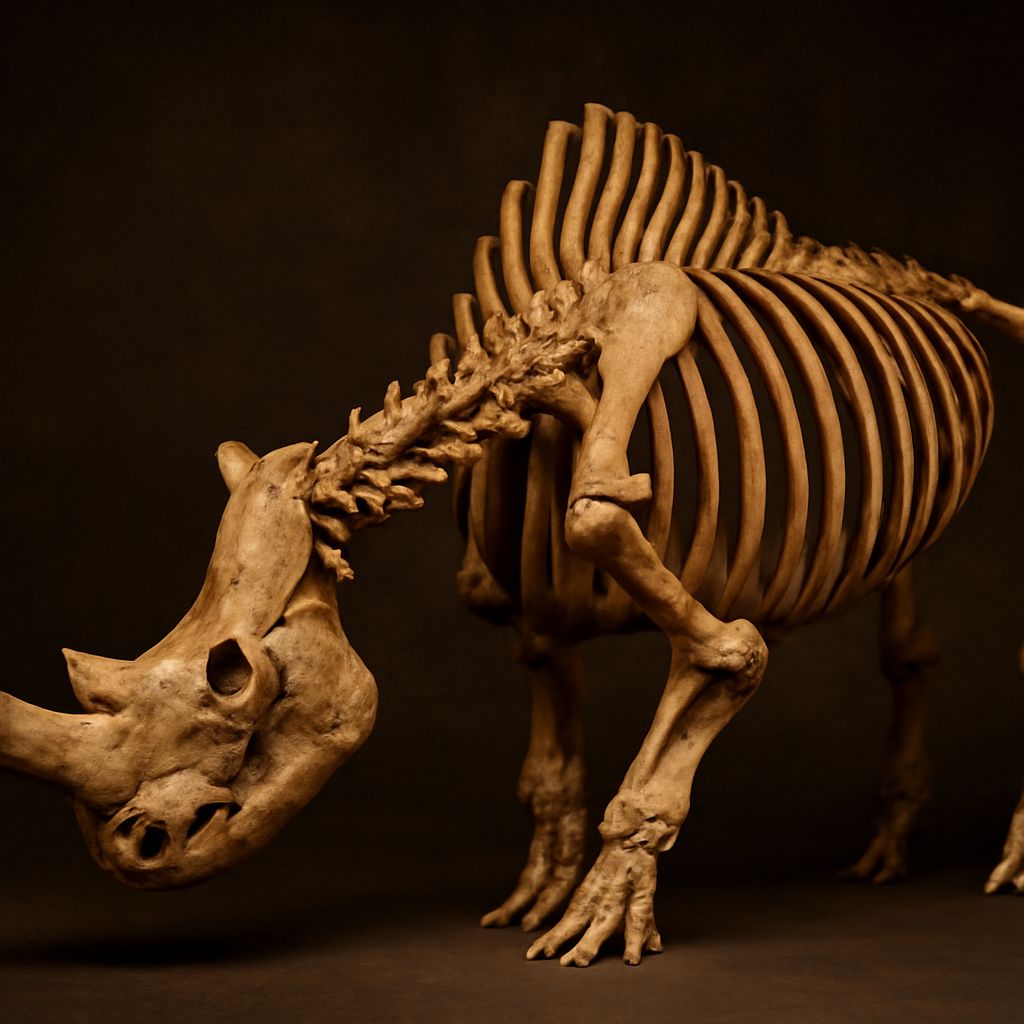
Understanding the Titanothere: An Ancient Mammal
The titanothere, often regarded as one of the most intriguing prehistoric mammals, roamed the Earth millions of years ago. These ancient creatures are part of the perissodactyl family, which includes modern-day horses, rhinos, and tapirs. Their presence offers a fascinating glimpse into the evolutionary history of mammals.
What is a Titanothere?
Titanotheres, also known as brontotheres, were large, herbivorous mammals that lived during the Eocene epoch, approximately 56 to 34 million years ago. They belonged to the family Brontotheriidae. These mammals were characterized by their massive size and distinctive features, which set them apart from other prehistoric animals.
Physical Characteristics of Titanotheres
Titanotheres were notable for their imposing size, with some species reaching up to 2.5 meters in height at the shoulder. One of the most striking features of these animals was their large bony skulls adorned with horn-like protrusions. These horns varied among species, with some displaying a simple Y-shape while others had more complex structures.
Their robust body was supported by sturdy, column-like limbs, adapted to support their considerable weight. Despite their size, titanotheres had relatively small brains compared to their body mass, a characteristic commonly observed in prehistoric megafauna.
Habitat and Lifestyle
Titanotheres thrived in a variety of environments, ranging from dense forests to open plains. Their teeth and jaw structures suggest they were browsers, feeding primarily on soft vegetation, including leaves and shrubs. This diet indicates that they occupied regions with abundant plant life.
Social behavior is inferred from fossil findings that suggest these animals may have lived in herds. Such social structures could have provided protection against predators and facilitated the rearing of young titanotheres. The presence of numerous fossils in certain locations points to the possibility of migration patterns, likely driven by climate changes and food availability.
Extinction and Legacy
The extinction of titanotheres occurred around the end of the Eocene epoch. Several factors likely contributed to their decline, including climate changes that led to cooler and drier conditions, affecting their food sources. Additionally, competition with other herbivores and the emergence of new predators may have played a role in their extinction.
Despite their disappearance, titanotheres left a significant impact on the fossil record, aiding scientists in understanding mammalian evolution. Their remains provide insights into the adaptive changes that occurred in response to environmental shifts over millions of years.
Titanotheres remain a subject of interest for paleontologists and enthusiasts alike, offering a window into the rich tapestry of life that existed long before humans walked the Earth.
