









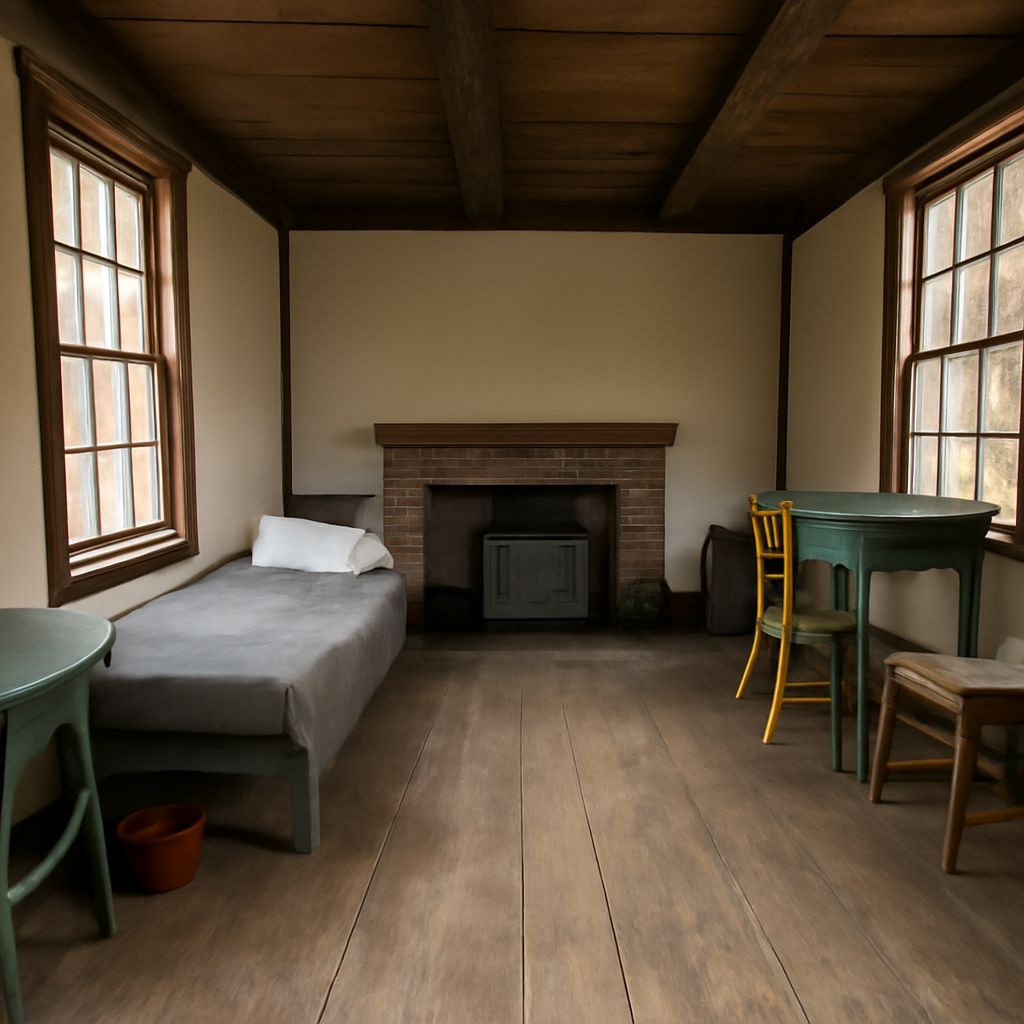
The iconic Thoreau cabin at Walden Pond has long stood as a symbol of simplicity, self-sufficiency, and philosophical reflection. Built by Henry David Thoreau in 1845, this humble abode served as the backdrop for his experiment in simple living and inspired his seminal work, “Walden.” Delving into the historical, architectural, and philosophical facets of this cabin unveils its enduring legacy in American literature and thought.
The Historical Context of Thoreau’s Cabin
In the mid-19th century, America was undergoing rapid industrialization and urbanization, leading many to question the impact of these changes on society and the individual. It was in this era of transformation that Henry David Thoreau decided to retreat to the woods near Walden Pond in Concord, Massachusetts. On July 4, 1845, he began his experiment in simple living, constructing a small cabin where he lived for two years, two months, and two days.
Thoreau’s decision to reside at Walden Pond was driven by his desire to explore the essentials of life, free from the distractions and complexities of society. This period of solitude and introspection allowed him to immerse himself in nature and contemplate his philosophical ideas, which later materialized in his book “Walden; or, Life in the Woods.” The cabin thus served as a physical and metaphorical space for self-discovery and literary creation.
The Design and Structure of the Cabin
The design of Thoreau’s cabin was deliberately simple, reflecting his commitment to a minimalist lifestyle. Constructed primarily from locally sourced materials, the cabin measured approximately 10 feet by 15 feet and stood 8 feet tall. It featured a single room that included a bed, a table, a writing desk, and a fireplace for heating and cooking.
Thoreau’s choice of design and materials was driven by functionality and cost-efficiency. The entire construction cost just $28.12½, a testament to his belief in living economically and sustainably. The cabin’s straightforward design not only met Thoreau’s basic needs but also underscored his philosophical stance on living with only what was necessary.
Thoreau’s Life and Philosophy at Walden Pond
During his time at Walden Pond, Thoreau engaged in various activities that aligned with his philosophical pursuits. He spent his days observing nature, writing in his journal, and reflecting on the relationship between humanity and the natural world. This period was crucial for developing his ideas on individualism, self-reliance, and environmental stewardship.
Thoreau’s philosophy emphasized the importance of living deliberately and with purpose. He argued that by simplifying one’s life and focusing on personal growth and connection with nature, individuals could attain greater fulfillment and understanding. His experiences and insights gained at Walden Pond formed the basis of “Walden,” where he articulated these ideas and encouraged others to seek a deeper connection with the world around them.
The Legacy of Walden Pond Cabin
Though Thoreau’s original cabin no longer stands, its legacy endures as a symbol of transcendentalist ideals and a source of inspiration for generations. The site of the cabin at Walden Pond has become a pilgrimage destination for those seeking to connect with Thoreau’s vision and philosophy.
In 1945, on the centennial of Thoreau’s move to Walden Pond, a replica of the cabin was constructed near the original site. This reconstruction serves as a tangible reminder of Thoreau’s experiment and the enduring relevance of his ideas. The cabin and the surrounding woods continue to attract visitors who wish to experience the tranquility and inspiration that Thoreau once found there.
Thoreau’s writings about his time at Walden Pond have had a lasting impact on American literature and environmental thought. His emphasis on simplicity, mindfulness, and the intrinsic value of nature resonates with modern audiences who continue to grapple with issues of sustainability and personal fulfillment.