









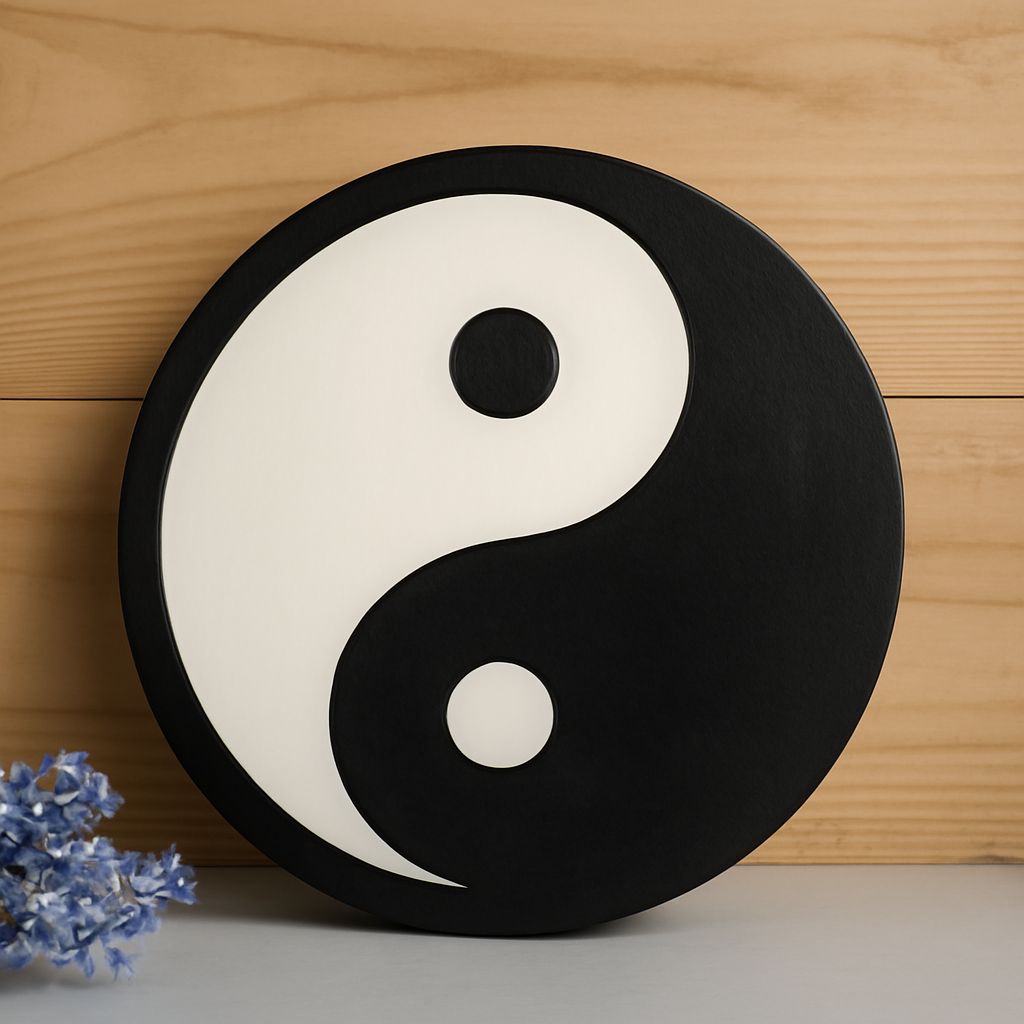
The Taijitu, commonly recognized as the Tai Chi symbol, is a powerful representation of balance and harmony within Chinese philosophy. Its simple yet profound design features a circle divided into black and white sections, each containing a dot of the opposite color. This emblem embodies the duality and interconnectedness of opposing forces, such as light and dark or male and female, that are integral to the natural world.
What Is the Taijitu?
The Taijitu is a visual symbol representing the concept of yin and yang, integral to Chinese philosophy. The symbol consists of a circle divided by a swirling line into two teardrop-shaped halves, one black and the other white. Each half contains a small circle of the opposite color, signifying the presence of yin within yang and yang within yin. This design illustrates the interdependence of opposites and the continuous cycle of transformation between them.
Symbolism of the Tai Chi Symbol
The Tai Chi symbol holds deep symbolic meaning, reflecting the philosophy of balance and duality. Yin, represented by the black section, is associated with qualities such as darkness, passivity, and femininity. Conversely, yang, symbolized by the white section, embodies light, activity, and masculinity. The dynamic interplay between yin and yang is central to understanding the universe’s equilibrium, where each force contains the seed of its opposite, ensuring perpetual change and harmony.
The central S-shaped line dividing the symbol further emphasizes the fluid relationship between yin and yang. It suggests that these forces are not static but in a constant state of flux, blending and influencing each other. This continuous movement reflects the natural rhythms of life, where balance is achieved through adaptation and transformation.
Historical Origins of the Taijitu
The Taijitu’s origins can be traced back to ancient Chinese cosmology and philosophy. The concept of yin and yang first appeared in texts from the Zhou dynasty (1046–256 BCE) and was later elaborated upon by Taoist philosophers such as Laozi and Zhuangzi. These early thinkers emphasized the importance of harmony between opposing forces as a foundation for a balanced and fulfilling life.
The symbol itself gained prominence during the Song dynasty (960–1279 CE), when it was adopted by Neo-Confucian scholars along with the integration of Taoist and Buddhist ideas. The Taijitu became a visual representation of these philosophical teachings, capturing the essence of the cosmic balance sought by practitioners of these traditions.
Applications in Tai Chi Practice
In Tai Chi, a martial art and moving meditation practice, the Taijitu serves as an emblem of the principles underlying the discipline. Tai Chi practitioners strive to cultivate balance, flexibility, and inner harmony, mirroring the yin-yang philosophy. The slow, deliberate movements of Tai Chi embody the interconnectedness and fluidity represented by the Tai Chi symbol.
Practitioners of Tai Chi utilize the Taijitu to guide their understanding of balance in both physical and mental aspects. The flowing movements cultivate awareness of how energy shifts between yin and yang, encouraging a harmonious integration of mind, body, and spirit. This practice helps enhance physical health, reduce stress, and promote a sense of well-being.
The Taijitu, or Tai Chi symbol, continues to resonate with individuals seeking balance and harmony in their lives. Its timeless design encapsulates the wisdom of ancient Chinese philosophy, reminding us of the interconnectedness of all things and the ever-present opportunity for growth and transformation.