









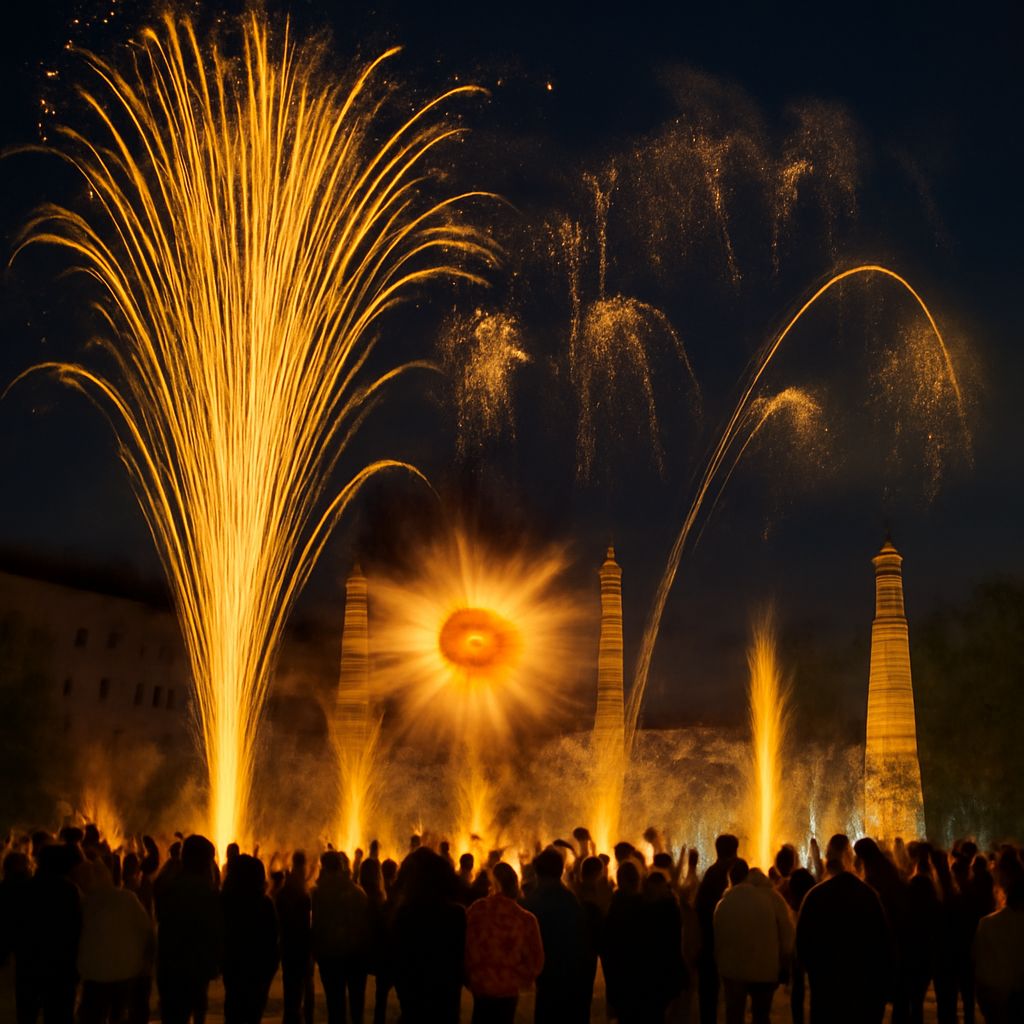
Chinese fireworks are renowned for their vibrant displays and rich history. Originating in ancient China, these pyrotechnic wonders have captivated audiences worldwide with their explosive colors and intricate designs. Understanding their origins, cultural significance, and technological evolution offers insight into how they have influenced global celebrations and continue to innovate in modern times.
Origins of Chinese Fireworks
The history of Chinese fireworks dates back to the Han Dynasty (206 BC–220 AD) when primitive forms of fireworks were created using natural materials like bamboo. The discovery that heating bamboo could produce a loud bang laid the groundwork for future developments. By the Tang Dynasty (618–907 AD), the invention of gunpowder by Chinese alchemists, who were originally in search of an elixir for immortality, marked a pivotal moment in the evolution of fireworks.
Initially, gunpowder was used in religious ceremonies to ward off evil spirits. The combination of charcoal, sulfur, and potassium nitrate proved to be a potent mixture that not only served spiritual purposes but also introduced the concept of celebratory displays.
Cultural Significance and Traditions
Chinese fireworks hold a deep cultural significance, entrenched in tradition and celebration. They are prominently featured in festivals such as the Lunar New Year and the Lantern Festival, symbolizing joy and prosperity. The loud bursts of fireworks are believed to scare away evil spirits and bring good luck to the community.
During these celebrations, fireworks illuminate the sky, creating a spectacle that enhances the festive spirit. They are also used in weddings and other significant life events, reflecting a cultural importance that extends beyond mere entertainment.
Technological Evolution Over the Centuries
Over the centuries, Chinese fireworks technology has evolved significantly. From simple bamboo tubes to complex aerial displays, innovation has played a key role in expanding the possibilities of pyrotechnics. The Song Dynasty (960–1279 AD) saw the development of fire arrows, which incorporated gunpowder for military purposes but also laid the groundwork for more intricate firework designs.
By the Ming and Qing Dynasties, the artistry of fireworks had advanced with the introduction of vibrant colors and elaborate patterns. This was achieved by adding metal salts to the gunpowder mix, producing various hues. The careful crafting of shells allowed for more detailed and controlled displays, contributing to the grandeur witnessed in modern celebrations.
Influence on Global Celebrations
The influence of Chinese fireworks has transcended borders, becoming an integral part of global festivities. The spread of pyrotechnic knowledge through trade and exploration introduced fireworks to Europe in the 13th century, where they became a staple in royal celebrations and public festivals.
Today, fireworks are a universal symbol of celebration, featured prominently in events like Independence Day in the United States, Bastille Day in France, and New Year’s Eve worldwide. This global adoption showcases the profound impact of Chinese innovations on cultural expressions across the world.
Modern-Day Production and Innovations
In contemporary times, China remains the largest producer of fireworks, supplying the majority of the global market. Modern manufacturing techniques have enhanced safety and efficiency, allowing for more spectacular and diverse displays. The integration of computer technology has enabled precise choreography in pyrotechnic shows, synchronizing fireworks with music and other visual elements.
Environmental considerations have also led to innovations in eco-friendly fireworks, reducing smoke and chemical residues. This evolution reflects a commitment to sustainability while preserving the awe-inspiring beauty that fireworks bring to celebrations.
The journey of Chinese fireworks from ancient rituals to modern-day spectacles is a testament to human creativity and cultural exchange. As technology continues to advance, the future of fireworks promises even more dazzling displays, captivating audiences for generations to come.
