









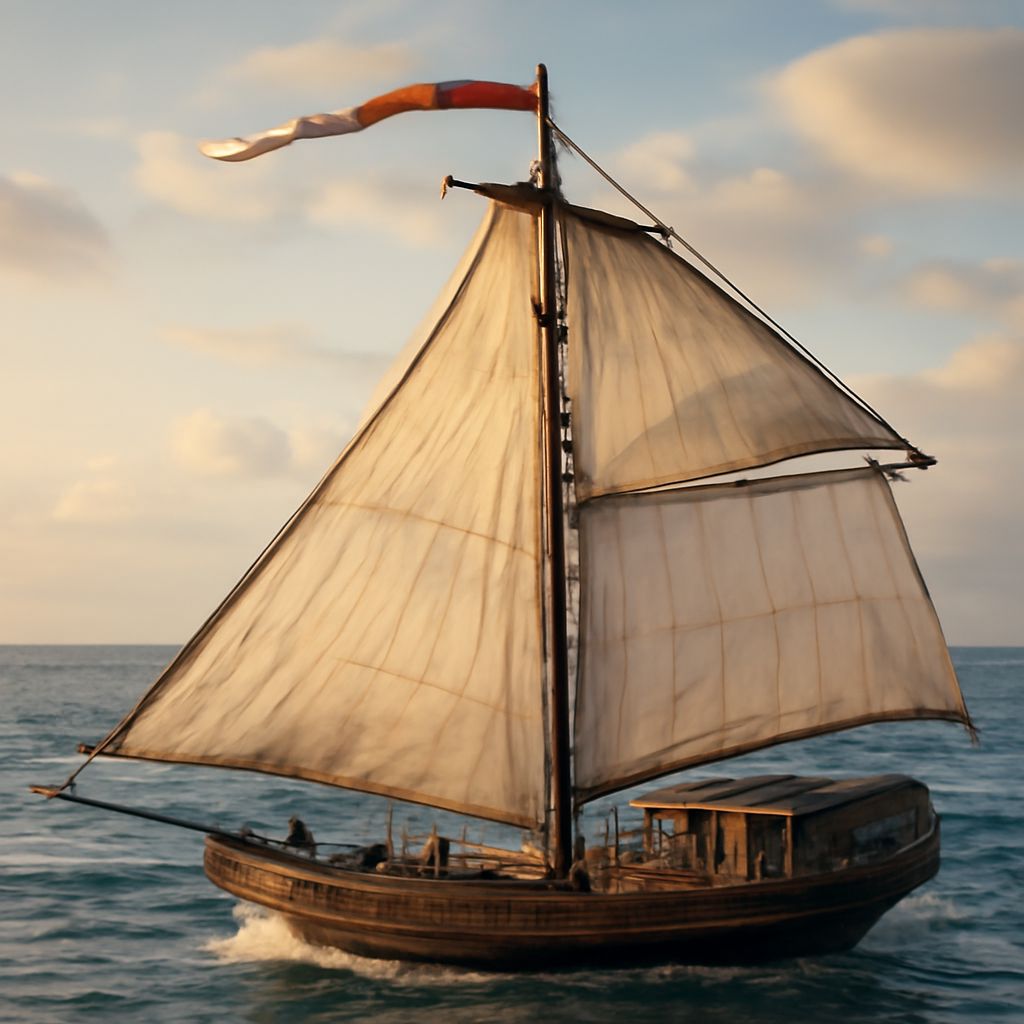
The Age of Sail was a period characterized by the dominance of sailing ships in naval warfare and commerce. Among the various types of vessels that roamed the seas, the sloop of war and the pirate sloop were notable for their distinct roles and features. Understanding these ships provides insight into their impact on naval strategies and piracy during this era.
What Is a Sloop of War?
A sloop of war was a class of warship used primarily by the naval forces of the 18th and 19th centuries. This vessel was typically a single-masted ship but could also have two or three masts, depending on design variations. The main purpose of a sloop of war was to serve as a fast and maneuverable warship capable of carrying out a variety of naval missions. These ships were usually armed with up to 18 cannons, making them formidable opponents in combat scenarios.
Unlike larger ships of the line, sloops of war were not intended to engage in direct, large-scale naval battles. Instead, they were tasked with reconnaissance, escort duties, and delivering dispatches. Their smaller size and agility allowed them to operate in shallow waters and along coastlines, where larger vessels could not venture.
Historical Role of the Sloop of War
The sloop of war played a significant role during the Age of Sail, especially in the British Royal Navy. Their versatility made them valuable assets in a fleet, capable of fulfilling various support roles. During wartime, sloops of war were often deployed for anti-piracy missions, patrolling trade routes, and protecting merchant vessels from pirate attacks.
One notable example of a sloop of war in action is HMS Alert, which was involved in the American Revolutionary War. Sloops were also instrumental during the Napoleonic Wars, where they were used to enforce blockades and engage enemy privateers. The adaptability and speed of sloops of war allowed them to perform well in these diverse roles, proving their worth in both offensive and defensive operations.
Characteristics of Pirate Sloops
Pirate sloops, on the other hand, were vessels favored by pirates due to their speed and agility. These ships were smaller and more lightly armed compared to warships, typically equipped with around 10 to 12 guns. The primary advantage of a pirate sloop was its speed, which allowed pirates to quickly overtake merchant ships and outrun naval pursuers.
Designed for quick raids, pirate sloops could navigate through shallow waters and narrow channels, making them ideal for surprise attacks and swift retreats. The crew aboard a pirate sloop was usually smaller, but highly skilled in seafaring and combat. This efficiency enabled pirates to operate effectively with fewer resources and to seize valuable cargo from unsuspecting targets.
Comparing Sloops of War and Pirate Sloops
While both the sloop of war and pirate sloops shared certain characteristics, such as speed and maneuverability, their purposes differed significantly. Sloops of war were state-sponsored ships designed for military objectives, whereas pirate sloops were independent vessels used for capturing prizes and plundering.
The construction and armament of these ships also varied. Sloops of war were built to withstand prolonged engagements and served within organized navies, often featuring more robust structures and a greater number of cannons. In contrast, pirate sloops prioritized speed and stealth over heavy armaments, focusing on evasion rather than direct confrontation with well-armed ships.
Despite these differences, both types of sloops played crucial roles in their respective contexts. Sloops of war contributed to the expansion and protection of empires, while pirate sloops carved out their own legacy through daring exploits and high-seas adventures.