









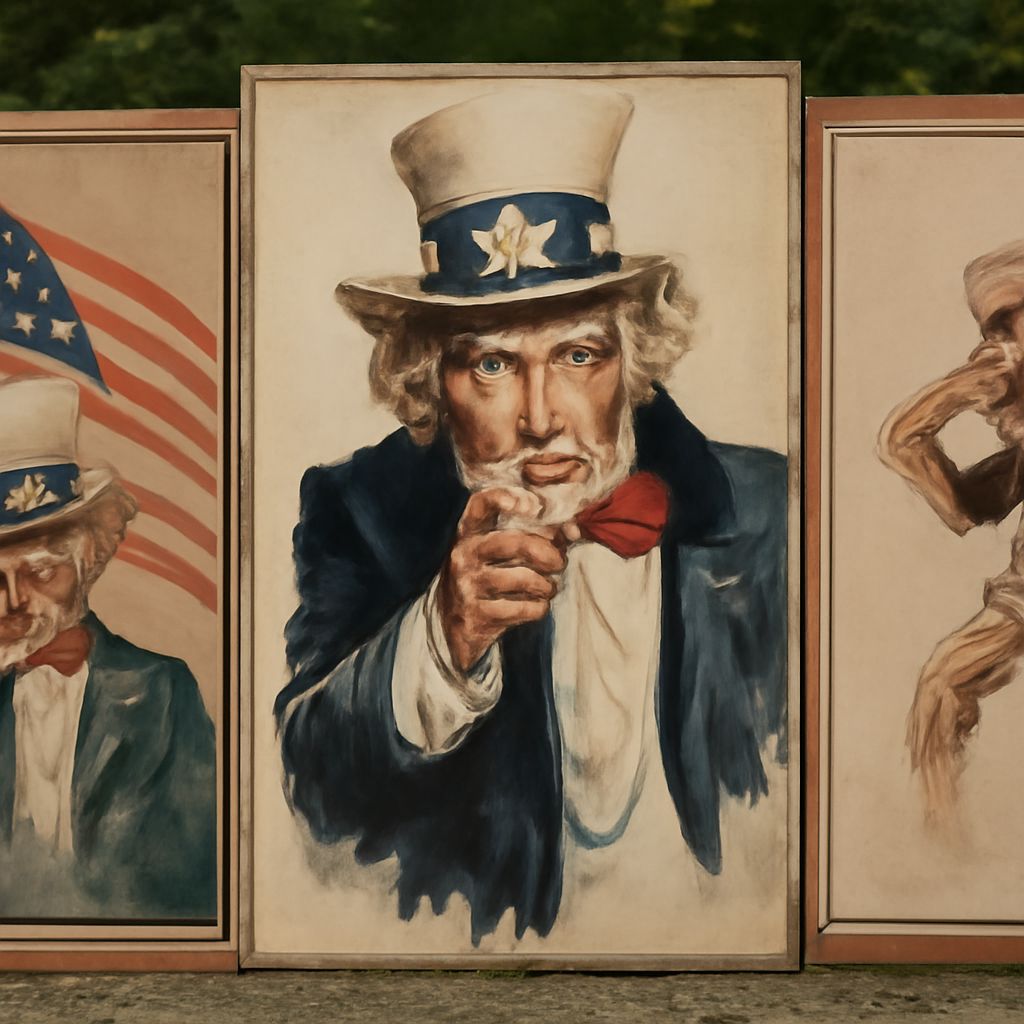
Your class is preparing a presentation on a wartime poster. Its message feels urgent, but urgency alone does not explain how it works. To analyze propaganda from World War I, look closely at what the image shows, whom it addresses, and what action it asks people to take. Then use the archive record to place the message in context.
Propaganda in WW1: Start With the Artifact
Propaganda is communication designed to influence beliefs or behavior in support of a cause. During the war, posters could ask people to enlist, lend money, conserve supplies, or support a particular view of the conflict. Propaganda in WW1 took many forms; a poster is one source that lets you inspect both words and images.
Before deciding what a piece means, record its title, creator, date, and publisher when the archive supplies them. Describe the visible elements: a figure, an object, a gesture, and the words on the page. Then ask what the design encourages its audience to do. Your description is evidence; your explanation of how it might persuade is an interpretation grounded in that evidence.
WW1 propaganda is not a neutral window onto public opinion. A poster shows what its maker wanted to communicate, not automatically what viewers believed or how they responded. To study reception, look for other evidence, such as contemporary letters, newspaper coverage, or records of the campaign’s results.
An American Call to Enlist
Open the Library of Congress record for “I Want You for U.S. Army”. The library credits artist James Montgomery Flagg and dates the poster to approximately 1917. Its description identifies Uncle Sam pointing at the viewer and explains that the poster sought recruits. A space under “Nearest recruiting station” could carry a local address.
Start with the visible details. Uncle Sam looks outward and points toward you. The large words “I want you” address an individual, while the reference to the Army names the requested destination. The location line turns the appeal into a possible next step: a viewer could find a place to enlist.
The gesture and direct address may make the national call feel personal. That is a reasonable reading of the design, rather than a measurement of its effect. You cannot determine from the poster alone whether a particular viewer felt persuaded or enlisted because of it. The Library of Congress notes that the image appeared first on a 1916 magazine cover before its wartime recruiting use, a reminder to distinguish the history of an image from the date of a particular poster.
A German Appeal for a War Loan
Compare Flagg’s poster with “Leiht euer Geld für der Heimat Schutz und Wehr! Zeichnet Kriegsanleihe!” in the same library’s collection. The catalog credits Hugo Frank and gives the publication as Stuttgart, [1917]. It describes a sword over a river landscape with villages on both sides. The catalog identifies the river as possibly the Rhine; the question mark in its description signals uncertainty.
The German text asks people to lend their money for the protection and defense of the homeland and to subscribe to a war loan. The intended action is financial: a reader is asked to lend money, rather than join the Army. As an example of German WWI propaganda, the poster links that loan to defending a place the audience might recognize as home.
The sword can suggest military protection; the villages can make the thing being protected concrete. Those are interpretations of the visual relationship. The text explicitly names protection and asks for money, but the poster itself does not prove that a loan would protect any particular village. Nor does its survival in an archive tell you how many people saw it or subscribed.
Compare Purpose, Audience, and Persuasion
Both posters use direct appeals, but they ask for different contributions. Flagg’s figure addresses a potential recruit; Frank’s message addresses people who could lend money. One uses a pointing personification of the United States, while the other places a weapon over a landscape. WW1 propaganda could connect a national cause to an individual’s decision through either a face and gesture or an image of a place under protection.
Pay attention to wording as well as pictures. In Flagg’s poster, “you” gives the request a personal target. In Frank’s, the appeal to the homeland supplies a reason for the financial request. The designs leave much unsaid: neither poster is a complete account of the war, the risks of service, or the terms and outcome of a loan. Those omissions matter when you explain the message’s persuasive purpose.
Avoid treating an intended audience as proof of a uniform response. People who saw propaganda in WW1 could agree, resist, ignore it, or understand it differently. Evidence of those responses requires sources beyond the posters. The German wartime propaganda example also represents one appeal for one purpose; it cannot stand for every German wartime message.
Comparison Activity: What Can You Support?
Open both archive links and make two columns. In each, write one visible feature, the requested action, and one possible interpretation. Then test these three statements against the items:
- “Both posters ask for the same action.” The evidence points the other way. The American poster seeks Army recruits; the German poster asks people to subscribe to a war loan.
- “The German sword suggests protection.” This is a plausible interpretation, supported by the sword’s position over the landscape and the wording about defending the homeland. Label it as a reading, not a documented statement of every viewer’s reaction.
- “Everyone who saw Uncle Sam enlisted.” The poster cannot establish that result. You would need independent evidence about exposure and enlistment, and even those figures would require care before attributing a decision to one image.
For a final exercise, write a caption of two sentences for each item. Use the first for the creator, approximate date, and visible content. Use the second to explain a possible persuasive effect and the detail supporting it. This method makes a historical claim about WW1 propaganda traceable to the artifact while keeping your interpretation open to examination.